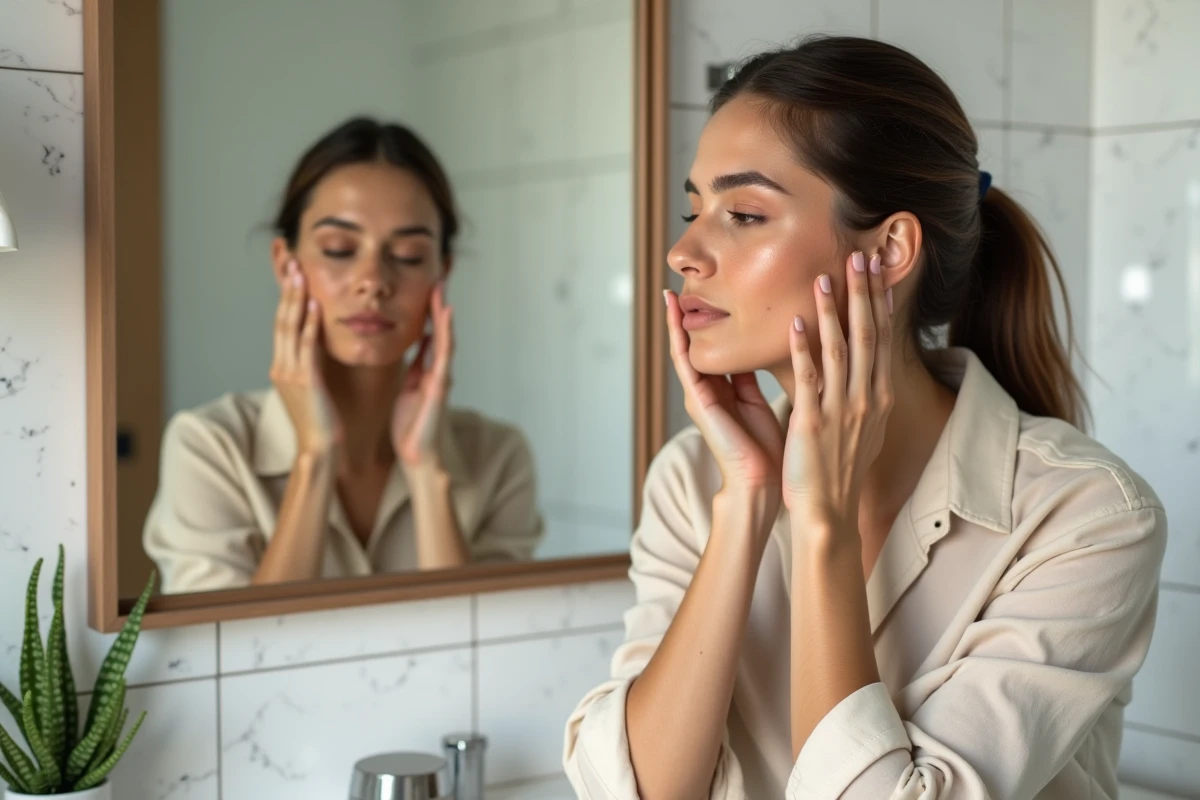
Your skin feels tight after cleansing, your complexion looks dull by midday, and you’re using multiple products without seeing results. Often, the number of products applied does more harm than their absence. Revealing your natural beauty daily relies on a few precise, well-chosen gestures and an understanding of what is really happening beneath the surface of the skin.
Skinimalist routine: reduce steps to gain radiance
You may have noticed that your skin reacts better during vacations when you apply fewer products? It’s not a coincidence. A Mintel study from 2024 on beauty routines in Europe confirms that consumers who reduce the number of steps and favor multifunctional formulas report fewer skin irritations.
The principle of skinimalism is based on one rule: each product must serve a clear function. A gentle cleanser, a moisturizer suited to your skin type, and sun protection. Three steps are enough in the morning. In the evening, careful makeup removal followed by the same moisturizer covers most needs.
Layering serum, essence, ampoule, and cream does not yield better results if your skin barrier is already weakened by too many active ingredients. Fewer products applied regularly yield more results than a complex routine followed halfway. The financial gain is also significant: focusing your budget on two or three quality formulas rather than eight mediocre bottles changes the game.
Resources like belle-et-unique.fr help identify suitable treatments without falling into the trap of product overload, making this sorting easier.

Blue light and sleep: what your screen does to your skin
Beauty articles often discuss sleep. Getting enough sleep helps the skin regenerate, that’s a given. However, the blue light emitted by screens before bedtime plays a direct role in the quality of this regeneration.
A publication in the Journal of Cosmetic Dermatology indicates that blue light increases skin oxidative stress and disrupts the circadian rhythm. In simple terms, scrolling on your phone in bed not only delays falling asleep: it directly affects the quality of your skin’s recovery during the night.
Two concrete adjustments before bedtime
- Turn off screens at least thirty minutes before sleeping. The “night mode” on phones reduces blue light but does not eliminate it – putting the device down remains the most effective solution.
- Apply your night cream right after cleansing your face, not just before bed. The skin absorbs active ingredients better when it is clean and slightly damp.
- Ventilate the room a few minutes before going to bed to lower the ambient temperature, which promotes faster sleep onset and deeper sleep.
These gestures cost nothing. Their effect on your complexion upon waking can be noticed in just a few days.
Natural cosmetics: what the word “natural” really means on a label
A bottle that claims “natural” or “of natural origin” does not guarantee much without specifics. The guidelines from the Sub-Working Group on Claims of the European Commission, updated at the end of 2023, now require that the actual proportion of naturally sourced ingredients be substantiated to justify these claims.
Before this clarification, a cream containing a small amount of plant extract could legally be labeled as “natural.” This ambiguity has fueled years of greenwashing in the cosmetics industry.
Reading an INCI list without being a chemist
The INCI list (International Nomenclature of Cosmetic Ingredients) appears on every package. Ingredients are listed in descending order of concentration. If water (aqua) and a silicone appear in the first and second positions, and the plant extract touted in marketing is at the end of the list, its presence is negligible.
Two simple guidelines to help you sort:
Look at the first five ingredients: they make up the majority of the product. If you find vegetable oils, shea butter, or aloe vera among them, the product has a genuinely natural base. If you only see synthetic names, the “natural” label on the packaging is a marketing ploy.
Labels like Cosmos Organic or Ecocert provide a stricter framework than basic European regulations. Their presence on a product indicates an independent audit, not just a self-declaration by the manufacturer.

Hydration and nutrition: the glow of the complexion is built from within
No cream can compensate for dehydrated skin from within. Skin hydration depends as much on what you drink and eat as on what you apply.
Fatty acids found in fatty fish, nuts, or olive oil help maintain the flexibility of the skin barrier. Antioxidants from colorful fruits and vegetables (carrots, blueberries, peppers) help the skin defend against daily oxidative stress.
A radiant complexion primarily reflects nutritional balance, not an accumulation of topical treatments. When nutrition provides the right nutrients, the skin needs fewer external fixes.
This observation aligns with the skinimalist logic: by taking care of the basics (sleep, nutrition, hydration), you naturally reduce the number of products needed. Your beauty routine becomes shorter, more effective, and your skin regains its glow without artificial enhancements.
Natural beauty in everyday life requires neither a huge budget nor dermatologist expertise. It relies on simple choices, consistently repeated: few well-chosen products, screen-free sleep, and a diet that nourishes the skin from within.