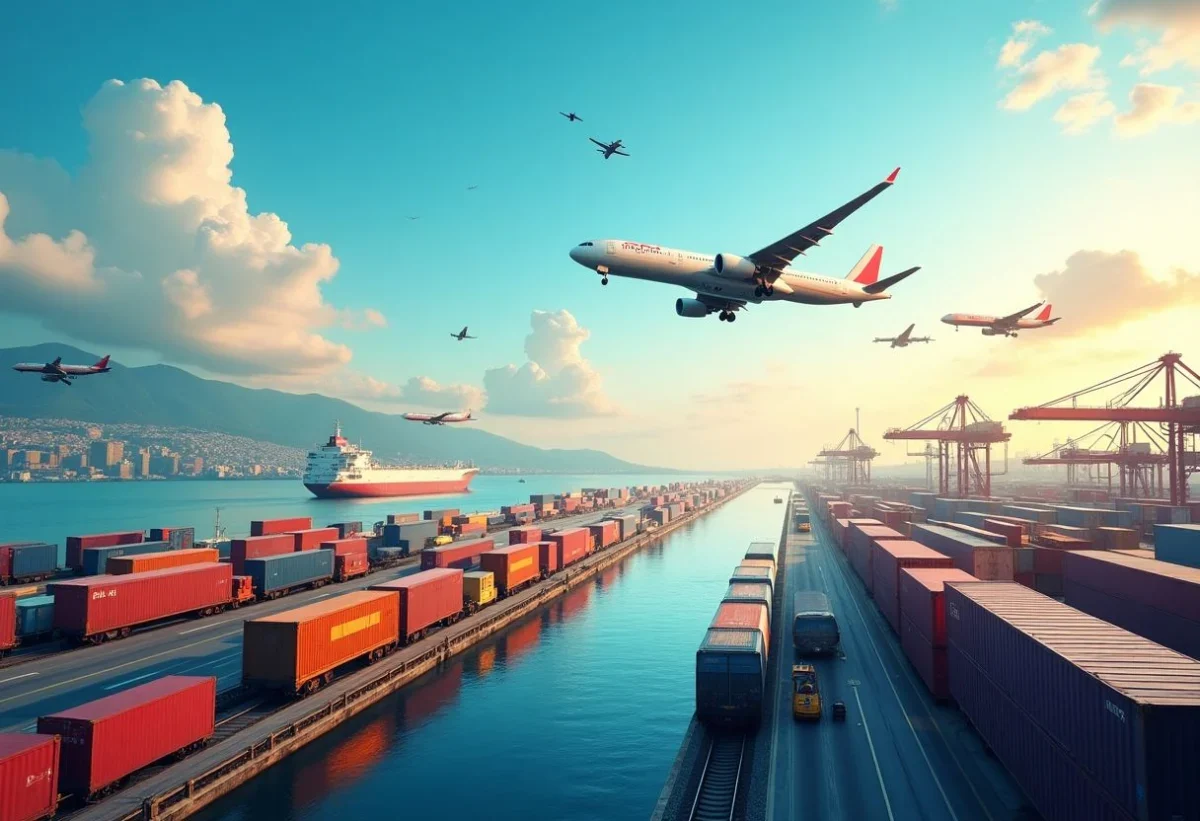
International transport is a cornerstone of the modern global economy. It connects not only continents but also cultures, markets, and technological innovations. Every day, tons of goods cross borders thanks to a complex network of roads, railways, shipping routes, and air corridors. Without this sophisticated system, the world as we know it could not function. Indeed, many are unaware of the scale of the challenges and stakes that lie behind this sprawling logistical operation.
The strategic importance of maritime transport
Maritime transport is often considered the pillar of global trade, carrying about 90% of goods across the globe. Its role is immeasurable in the international logistics chain.
Key strategic maritime routes, such as the Strait of Malacca or the Suez Canal, are essential pathways for exchanges between East and West. They ensure efficient and relatively economical delivery of goods. The importance of these routes cannot be underestimated as they facilitate the transit of petroleum products, cars, clothing, and many other goods.
Ports also play a critical role in this system. Hubs like Rotterdam in Europe or Shanghai in Asia are crucial points for the transshipment and temporary storage of goods. Their layout, technology, and processing capacity directly influence the fluidity of international trade exchanges.
The challenges of air transport
Representing a more modest percentage of the overall volume of exchanges, air transport is nonetheless essential, especially for the transport of high-value goods or perishable products.
- Speed is a key factor in this sector. Aviation allows for the delivery of goods to all corners of the world in a few hours rather than several weeks.
- Environmental challenges are a major concern. Aviation is responsible for a significant share of global CO2 emissions, pushing the sector to innovate towards greener technologies.
- Air security remains a constant concern, requiring considerable efforts to prevent terrorism, illegal trafficking of goods, and other potential threats.
The role of technologies in land transport
Land transport encompasses both rail and road transport, playing a crucial role in the local and international redistribution of products once unloaded.
Technologies such as the Internet of Things (IoT) and artificial intelligence are transforming this sector. Smart sensors enable real-time tracking of goods, optimizing routes and reducing delivery times.
Rail transport is also evolving with initiatives towards high-speed and electric trains, thereby reducing carbon footprints and increasing energy efficiency.
International regulations and policies
Regulations play a determining role in international transport, influencing both the fluidity and security of cross-border operations.
International agreements, such as those from the WTO, establish norms and standards for the trade of goods, thus facilitating exchanges while ensuring consumer protection.
Customs and tariff policies can also have a considerable impact. They are often geopolitical tools used to promote or restrict certain flows of goods.
Behind these regulations lies the necessity to balance economic, environmental, and social interests, a challenge that nations attempt to tackle with various and often complex approaches.