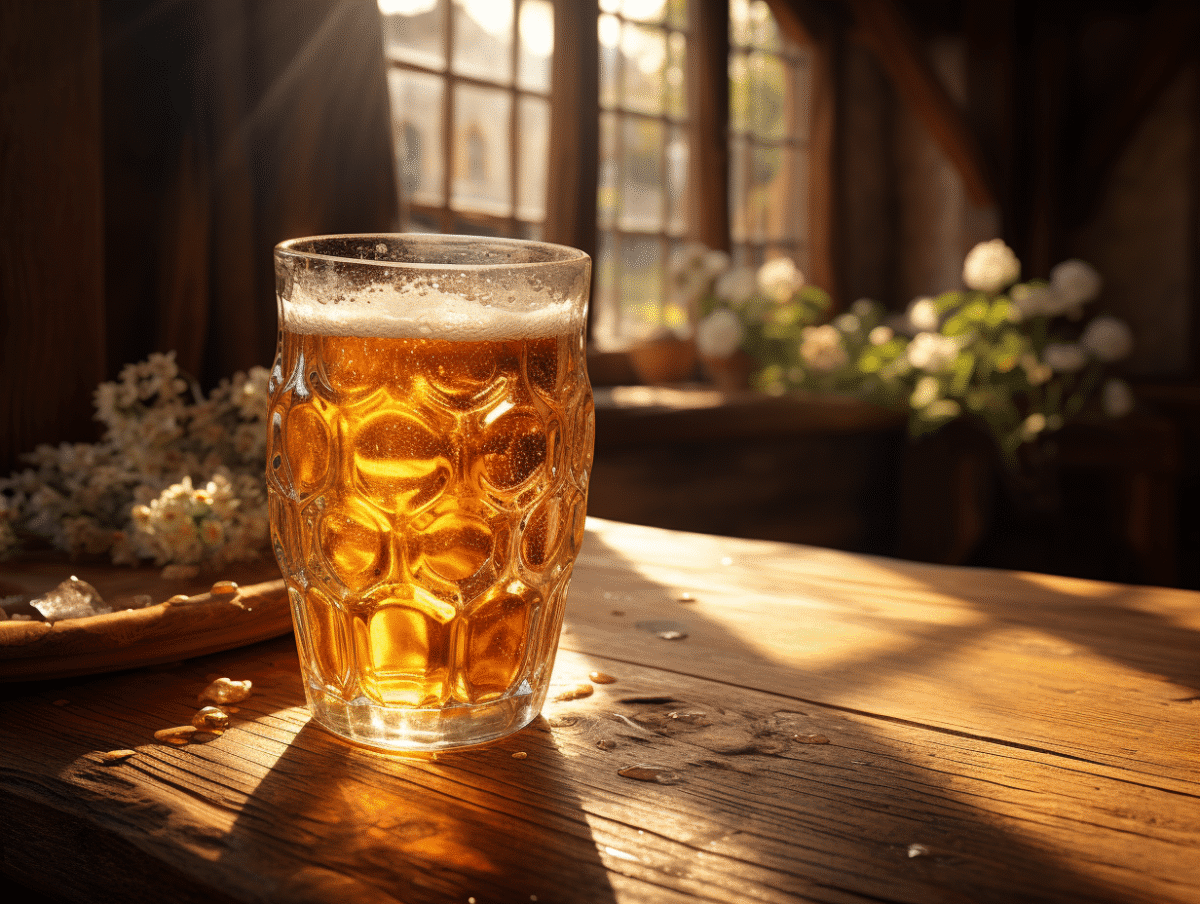
At the heart of Brittany, a land of legends and traditions, the ancestral art of honey fermentation continues, giving rise to emblematic beverages: chouchen and mead. These alcoholic drinks, with roots deeply embedded in Celtic culture, bear witness to a rich gastronomic heritage and a history that interacts with the region’s bees and flowers. Chouchen, often associated with the conviviality of fest-noz, and mead, the nectar of ancient gods, are two facets of a shared passion for the sweet and intoxicating flavors of the Breton terroir.
From Beekeeping to Tasting: The Journey of Chouchen and Mead
In the beginning, there is honey, this golden and sweet substance, the fruit of the tireless work of bees, particularly the black bee of Brittany, precious for local beekeeping. The transformation of this nectar into alcoholic beverages occurs through a process of fermentation, where honey meets water to bring chouchen and mead to life. While the difference between chouchen and mead often lies in the fermentation duration, shorter for the former, the recipes vary and are passed down, reflecting the diversity of flavors and practices.
Master mead maker, Fabien Kaczmarek, a tasting expert, reveals the subtleties of these drinks. Mead, known since ancient times as ‘nectar of the gods’, requires particular attention regarding honey selection and fermentation control. The traditional production of mead uses tools such as the Dame-Jeanne and the airlock, ensuring quality and fidelity to ancestral methods.
Chouchen, on the other hand, is an ancestral drink representative of Breton origins. Joseph Postic, an emblematic figure of this tradition, registered the term ‘chouchen’, thus anchoring the name in the regional heritage. The specificity of this drink also lies in the use of cider brandy, added to the fermented honey, giving chouchen its unique character and specific alcohol content.
Beekeeping in Brittany, although faced with the threats of neonicotinoids, remains the cornerstone of the production of these specialties. Honey, representing humanity’s first alcoholic drink in the form of mead, is now offered in a varied range, such as that of Hydromelix by Fisselier. French royal jelly, another treasure of the hive, adds to the richness of Breton ingredients. From the apiary to the table, the journey of chouchen and mead is a voyage through time, history, and Breton know-how.

Brittany’s Culture and Identity Through Chouchen and Mead
Chouchen and mead, beyond their quality as alcoholic beverages, embody the cultural richness of Brittany. These elixirs, true ambassadors of the terroir, reflect the ancestral traditions and the history of a region proud of its origins. Chouchen, in particular, with its specific fermentation and production closely linked to cider brandy, stands out as an alcoholic drink representative of Breton identity. It accompanies stories and legends, contributing to the perpetuation of an intangible heritage.
Distillerie Fisselier, known for its fruit liqueurs typical of the region, such as Plougastel strawberries and salted butter caramel, is part of this dynamic of promoting local products. Mead, sometimes dubbed ‘nectar of the gods’, finds a contemporary expression at Fisselier through the Hydromelix range, which fuses tradition and innovation. These creations, far from being mere fermentation products, are the result of a know-how that evolves while preserving its essence.
Heraldic symbols, such as those appearing on the coats of arms of La Meilleraye-de-Bretagne and the Labbaye family, highlight bees, testifying to the importance of beekeeping in Breton culture. These coats of arms, marked by the presence of the bee, illustrate the unbreakable link between natural heritage, history, and artisanal practices. Homemade chouchen and mead are not just drinks: they are expressions of regional pride, a preserved identity, and a commitment to the future of Breton culture.