Pruning a hedge or a decorative shrub at the wrong time, with the wrong technique, produces exactly the opposite of the desired effect: bare base, absent flowering, lasting plant stress. The pruning of hedges and shrubs follows precise biological logics, which vary according to the type of wood on which the plant flowers, the season, and the regulations in force. This article compares the periods and methods of pruning based on the growth behavior of each category of plants.
Flowering on old wood or new wood: the criterion that changes everything
Most pruning errors stem from confusion between two flowering mechanisms. A shrub that flowers on wood formed the previous year (forsythia, lilac, deutzia, weigela) should not be pruned at the same time as a shrub that flowers on the current year’s shoots (buddleia, hibiscus syriacus, summer spiraea).
Pruning a lilac in February removes already formed flower buds. The flowering for the entire year is then lost. Conversely, cutting back a buddleia in March concentrates energy on new vigorous shoots that will bear summer flowers.
| Category | Common Examples | Pruning Period | Principle |
|---|---|---|---|
| Flowering on old wood (spring) | Forsythia, lilac, deutzia, Japanese quince | Just after flowering (late spring) | Remove the flowering branches to stimulate new shoots that will flower the following year |
| Flowering on new wood (summer) | Buddleia, hibiscus, summer spiraea, deciduous ceanothus | Late winter (February-March) | Cut back short to force the production of new flowering shoots |
| Non-flowering evergreens (structured hedges) | Thuja, cherry laurel, privet, yew | Late spring and early autumn | Maintain shape and density, prune after the first sap push |
| Mixed free hedges | Photinia, elaeagnus, viburnum | After flowering or fruiting | Light pruning to maintain natural growth and berries useful to wildlife |
This table summarizes the major families, but each species has its particularities. The resources available on sculpte-haie.com allow for refining the schedule for specific varieties.
Bird nesting and regulations: the period to respect before pruning

Competitors talk about pruning schedules without mentioning the regulatory constraint that conditions everything else. The nesting period extends from mid-March to the end of August, according to recommendations relayed by the French Office for Biodiversity (OFB) and echoed by many prefectures since 2023-2024.
During this period, any severe pruning of hedges is discouraged, except for safety imperatives (road visibility, access to networks). Destroying a nest, even unintentionally, constitutes an offense under the Environmental Code.
In practical terms, this reduces the pruning windows to two main slots:
- From September to mid-March for evergreen hedges and summer-flowering shrubs (structural pruning at the end of winter, before bud break)
- In May-June, just after flowering, for spring-flowering shrubs, checking beforehand for the absence of active nests in the branches
This constraint alters the usual planning. A gardener who prunes their hedges in April or July takes a legal and ecological risk. Prefectures are now publishing local orders with specific dates adapted to each department.
Ecological pruning of hedges: why the close cut is losing ground
In recent years, the League for the Protection of Birds (LPO) and several Natural Space Conservatories have recommended reducing systematic and highly structured pruning in favor of hedges maintained taller, wider, with preserved flowering and fruiting.
The reasoning is based on a simple observation: a hedge pruned too short and too often loses its ecological function. Berries disappear before birds can feed on them. Flowers are removed before pollinators visit. The base becomes bare due to a lack of low branching.
The so-called ecological pruning approach consists of:
- Pruning only one side of the hedge per year (alternating each year) to permanently maintain a dense and fruitful side
- Keeping a height above the minimum aesthetic, in order to preserve nesting areas in the upper part
- Allowing berry-bearing shrubs (viburnum, elderberry, blackthorn) to fruit before any intervention, by delaying pruning to winter
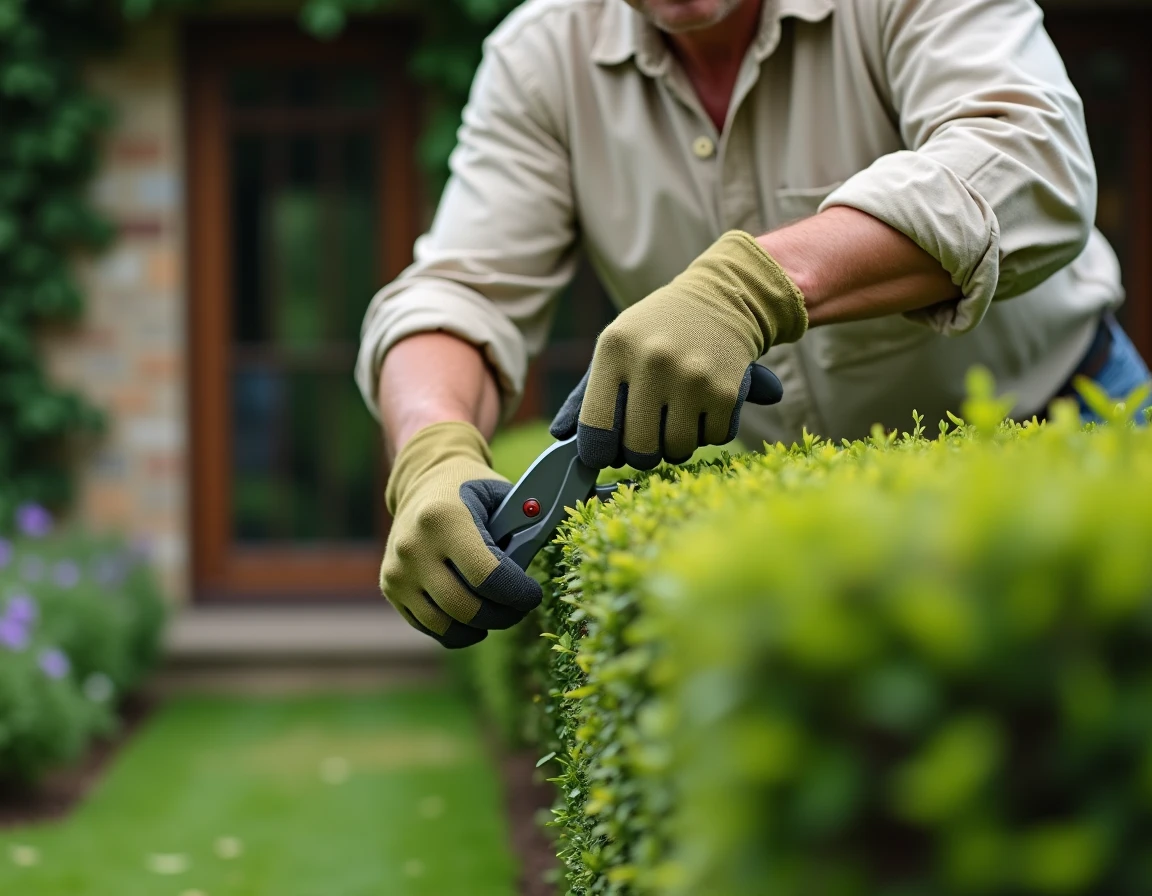
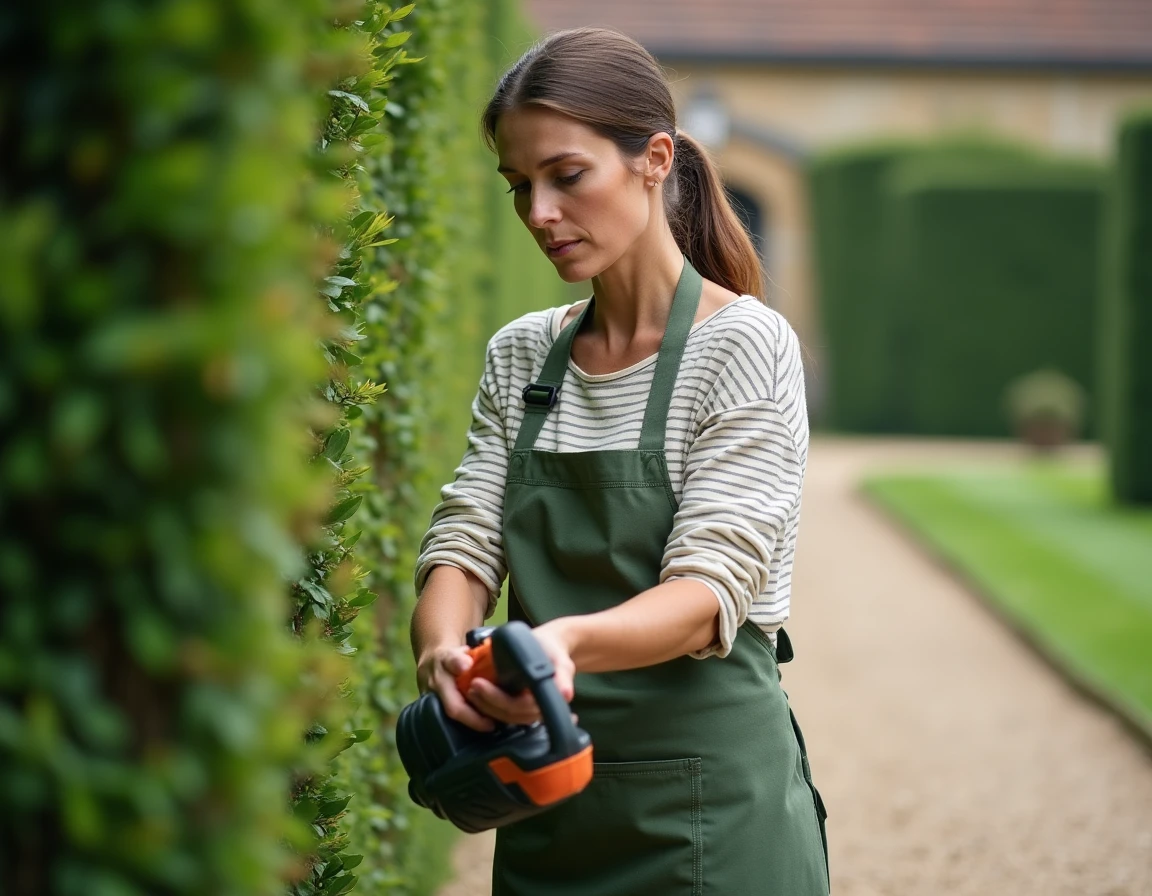
- Limiting mechanical pruning to hedge trimmers for flat surfaces, and favoring pruning shears for selective cuts on interior branches
However, this method is not suitable for all situations. A hedge of thuja at the property line, subject to boundary rules, must remain at the regulatory height. Ecological pruning mainly applies to rural hedges and gardens with enough space.
Training pruning and maintenance pruning: two distinct actions on decorative shrubs
On a shrub planted for less than three years, training pruning takes precedence. It involves shortening the branches by one third after planting, then gradually selecting the main branches that will give the adult structure.
This initial pruning may seem counterintuitive: one reduces a young plant that one wishes to see grow. Pruning short in the early years produces dense branching at the base, which avoids the classic syndrome of a hedge becoming bare at the bottom after a few seasons.
Maintenance pruning, on the other hand, is applied to established subjects. Its goal is different: to remove dead wood, aerate the center of the shrub to limit fungal diseases, and contain the volume without compromising flowering. On a spring-flowering shrub, this means removing a quarter to a third of the oldest branches after flowering, cutting them close to the ground to stimulate renewal from the base.
A well-sharpened pruning shear is sufficient for most isolated decorative shrubs. The hedge trimmer remains the tool for flat surfaces and structured hedges, but it creates jagged cuts on thick branches, which are entry points for parasitic fungi.
The distinction between these two types of pruning determines the long-term health of the garden. A shrub that was never trained in its early years will struggle to achieve a balanced silhouette later, even with regular maintenance.