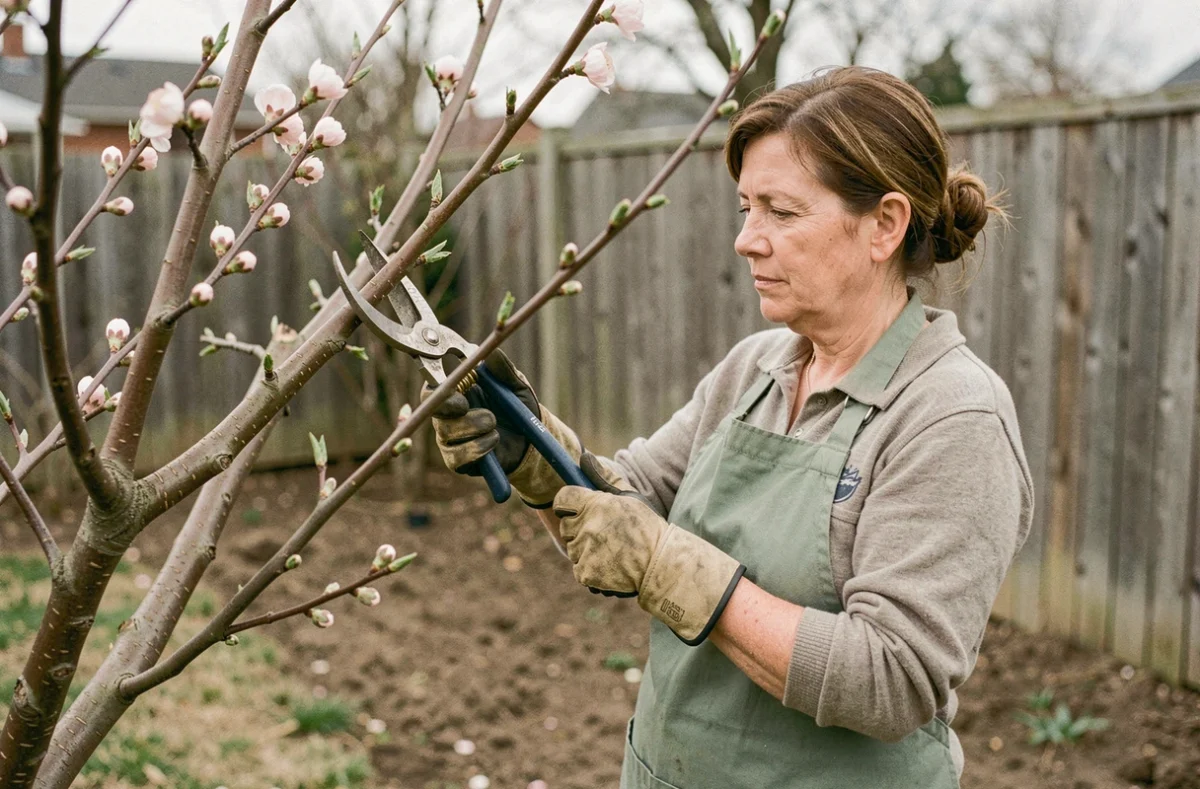
Pruning a prunus to limit its height involves removing part of the branches that already carry, in germ, the next flowering. The challenge lies in this balance: reducing the volume without sacrificing the productive branches. The technique, timing, and especially the dosage of each intervention determine the result.
Crown reduction of the prunus: cut in the right place rather than at the right level
Limiting the height of a prunus does not mean cutting the top flat. Topping, which cuts the main branches at an arbitrary height, leaves large open wounds and causes vigorous, vertical, fragile regrowth.
The effective method is crown reduction on lateral branching. Instead of cutting a branch at a given level, it is lowered to a secondary branch oriented outward, capable of taking over as a natural extension. The retained lateral branch must be sufficiently developed to ensure proper healing and limit stress shoots.
This technique preserves the characteristic rounded silhouette of the prunus and, above all, maintains a network of lateral branches on which floral buds will form. The method is described in detail on Paysans.org for each type of ornamental prunus.
Prunus already too tall: gradual reduction or single pruning
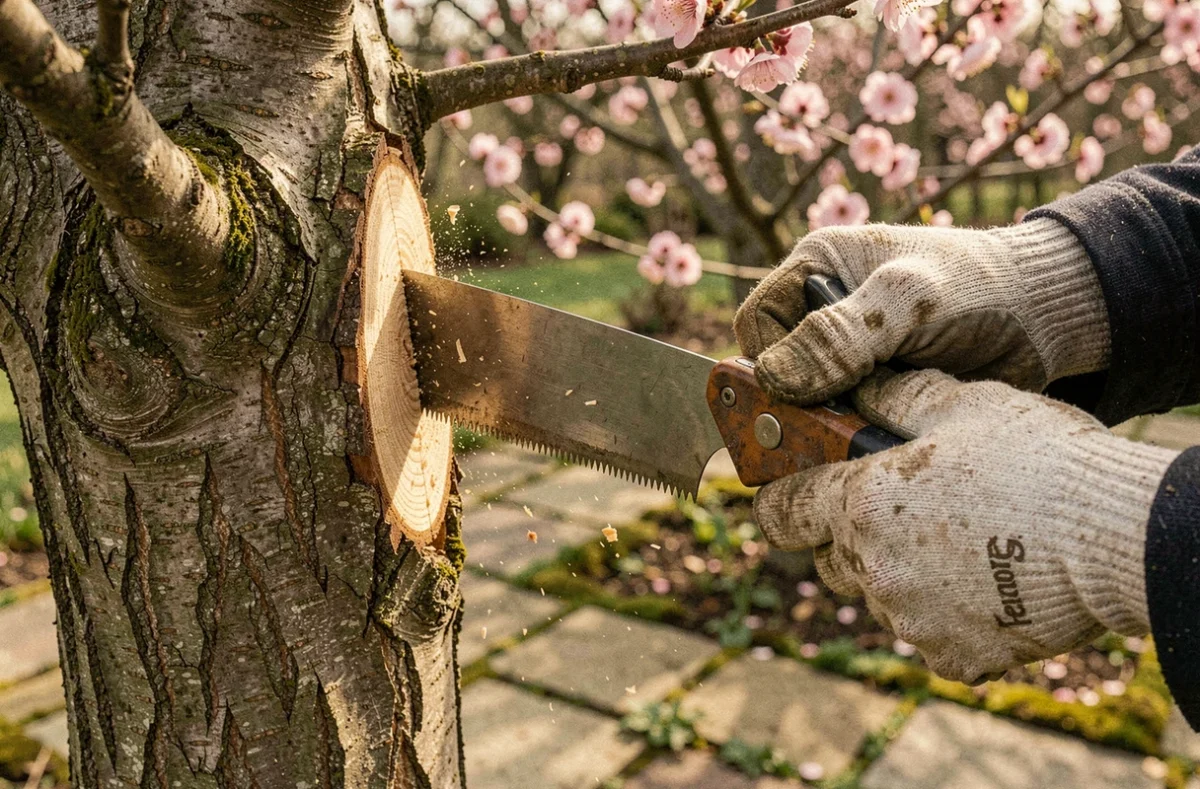
When a prunus far exceeds the available space, the temptation is to correct everything in one intervention. This is rarely the right option.
Why spread the reduction over several seasons
Removing more than a quarter of the living foliage in a single year generates stress that triggers two responses: a multiplication of vertical shoots and a general weakening against diseases, particularly gummosis. The tree, deprived of a large part of its photosynthetic surface, compensates with rapid and poorly placed shoots, which recreate volume without bearing flowers.
Spreading the reduction over two to three years allows the tree to gradually adapt its architecture. In the first year, the highest branches are reduced. In the second, the now dominant lateral branches are corrected. In the third, the silhouette is refined by removing any poorly oriented shoots.
The cost of a severe single pruning
Beyond the stress, a brutal reduction compromises flowering not just one spring, but often two. In the first season, the tree no longer has enough supporting wood. In the second, the formed shoots are too young to flower.
The gradual reduction sacrifices part of the flowering each year but never completely eliminates it. The garden retains a spring spectacle, even if reduced.
Prunus pruning schedule and weather conditions
The timing of intervention is a non-negotiable parameter. The floral buds of the prunus differentiate on the wood of the current year, between late spring and autumn. Pruning before flowering means directly removing already formed buds.
- Pruning after flowering, between May and June: the only window that allows the tree time to produce new shoots and initiate future buds before dormancy.
- Autumn and winter: periods to be strictly avoided for ornamental prunus. Wounds heal poorly in cold and humid weather, and the risk of gummosis or moniliosis increases significantly.
- Rainy weather, regardless of the season: cuts exposed to moisture are entry points for pathogenic fungi. Wait for a dry weather window, ideally two to three consecutive days without rain.
Frequency is as important as timing. A well-positioned ornamental prunus requires intervention only every two to three years. Systematic annual pruning weakens the tree and gradually reduces the intensity of its flowering.
Cutting gestures and healing on prunus
The prunus belongs to the Rosaceae family and shares with the cherry tree a particular sensitivity to gum flow. Each pruning wound represents a health risk, which imposes a precise protocol.
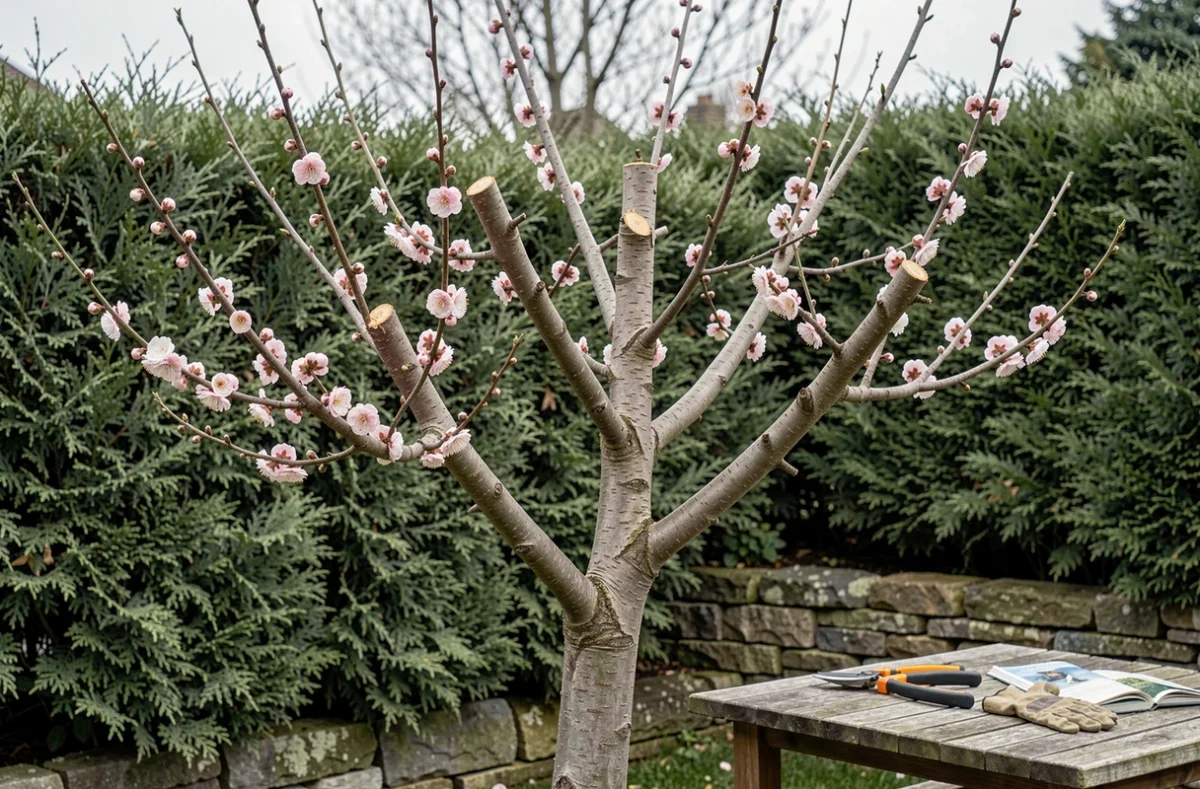
The cut is made at an angle, slightly above a bud or a branch oriented outward from the crown. This positioning encourages rainwater to flow away from the wound and directs the future shoot outward, maintaining the airy structure of the tree.
Disinfecting tools between each tree is a often neglected but crucial precaution. A pruner or saw passed from a prunus affected by moniliosis to a healthy subject directly transfers the pathogen. 70° alcohol or a diluted bleach solution is sufficient.
On cuts with a diameter exceeding a few centimeters, a healing paste limits the exposure of bare wood to fungal spores. For small cuts with pruners, natural healing is generally sufficient if the weather conditions are met.
Branches to target as a priority
- Dead wood and branches that cross in the center of the crown, sources of friction and injury.
- Vertical shoots resulting from previous prunings, which will not flower or will do so minimally and unbalance the silhouette.
- Low branches that are obstructive or shoots coming from the rootstock, common in grafted varieties like Prunus cerasifera or certain cultivars of Prunus serrulata.
Removing these elements as a priority reduces the overall volume without touching the lateral branches bearing floral buds. Thinning the center also improves air circulation, which reduces fungal pressure inside the crown.
The prunus is unforgiving of timing errors and overly generous cuts. A tree pruned sparingly, at the right time, on the right branches, retains its flowering almost intact from one year to the next. Conversely, a single poorly dosed intervention can delay the return of flowers by two complete seasons.