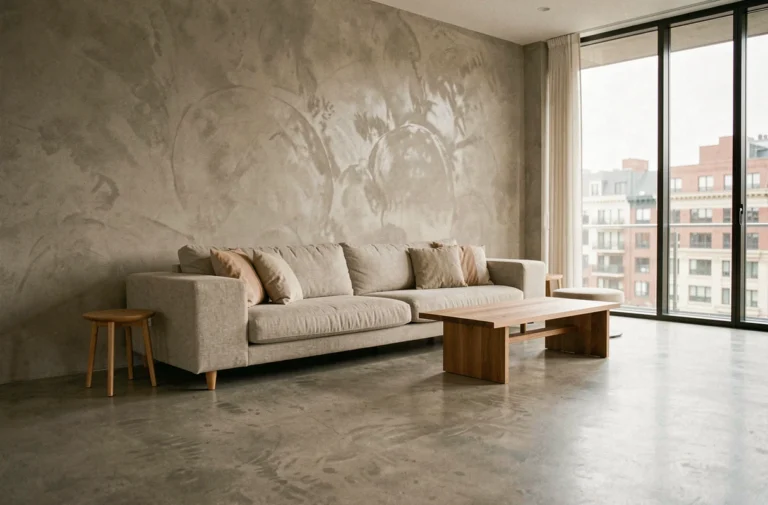
The glass wall has become an essential feature of interior architecture today, a catalyst for natural light and elegance. Borrowed from the industrial world of the 19th century, it has reinvented itself to adapt to our contemporary interiors, sometimes discreet, sometimes majestic. Its versatility makes it indispensable, whether to structure a space, create a subtle separation, or simply add an aesthetic touch. The glass wall enhances the interior by skillfully playing with transparency and brightness, while providing an elegant solution to delineate spaces without completely partitioning them. It has become a true signature in modern design, embodying both a return to roots and a step towards a more open and luminous habitat.
The origins and evolution of the glass wall
Since its creation, the glass wall has traversed the ages, evolving to meet the stylistic and practical needs of different centuries. This journey through time highlights its continuous adaptation and longevity.
Originally, the glass wall found its place in artists’ studios and factories, where natural light was precious for work. Quickly, it made its way into public buildings and greenhouses, symbolizing the industrial and architectural progress of the time. Art Nouveau established it in residential spaces with more intricate patterns, using metal and glass to create refined structures.
Over the decades, its design has refined, simplified, and integrated into modern interiors where it has become an essential style element.
The different types of glass walls
The diversity of glass walls allows for various needs and aesthetic tastes. Each has its own characteristics and can transform a space according to the desired style and function.
- Workshop glass wall: Inspired by artists’ studios, this glass wall often consists of large black steel divisions, adding an industrial touch to the interior.
- Contemporary glass wall: It is characterized by clean, modern lines, using materials like aluminum for a minimalist aesthetic.
- Custom interior glass wall: Adapted to the specific constraints of the habitat, it integrates perfectly into the existing space, whether classic or modern.
- Sliding glass wall: Ideal for limited spaces, it offers a practical solution while maintaining the elegance and functionality of traditional doors.
Installing a glass wall: practical and aesthetic aspects
Installing a glass wall is not just a simple decorative act. It is an approach that involves both practical and stylistic considerations. Whatever your reasons for choosing it, this architectural element requires prior reflection to integrate well into the habitat.
- Space evaluation: Before deciding to install a glass wall, it is important to consider the room’s configuration, the direction of light, and the desired effect. It is essential to evaluate the ceiling height, wall width, and the location of existing windows for optimal performance.
- Choice of materials: Glass walls are available in different materials such as wrought iron, aluminum, or wood. The choice should be made based on the desired style and budget constraints.
- Installation and safety: It is advisable to call on a professional for a secure installation. A well-fixed glass wall ensures both aesthetics and safety, avoiding risks associated with a haphazard installation.
- Aesthetic integration: The glass wall can be complemented by decorative elements such as curtains, blinds, or climbing plants to personalize the space. A well-thought-out interior glass wall can become the centerpiece of a home, harmonizing the different decorative elements.
The incomparable advantages of the glass wall
The glass wall does not just add charm to a space. It offers numerous advantages that make it a wise investment for anyone looking to enrich their interior.
First of all, the glass wall allows for optimal diffusion of natural light, creating a bright and warm atmosphere.
Next, it provides an elegant separation solution without completely partitioning the space. This play of transparency offers a sense of openness and infinity, even in restricted areas.
Finally, in terms of design, it adds a unique aesthetic dimension, enhancing the character and personality of each room.