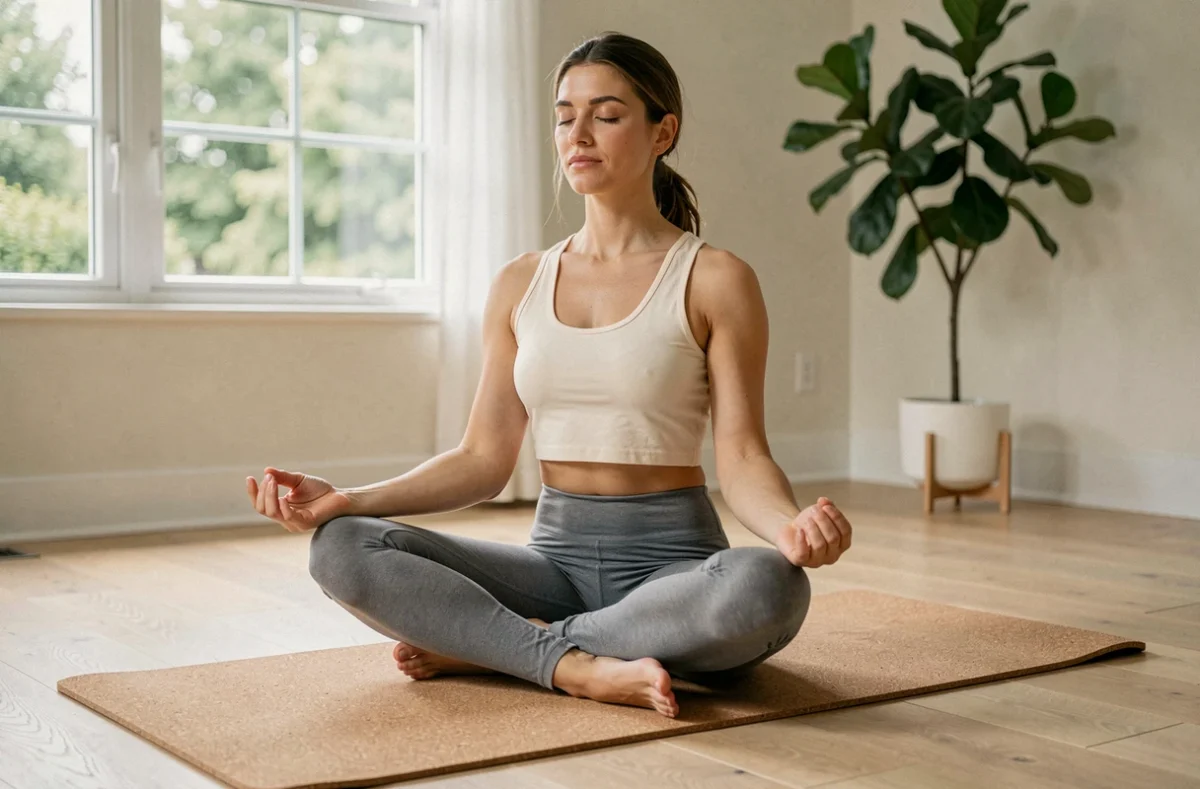
Yoga refers to a set of postural, breathing and concentration techniques designed to connect bodily movement with mental activity. Practised in many different forms, this discipline works simultaneously on flexibility, stress management and attention.
A systematic review published in 2024 found an improvement in depressive symptoms among participants in the included trials, while also noting substantial variation in protocols, durations and follow-up, as well as a risk of bias in several studies. Yoga can therefore complement care, but current evidence does not justify presenting it as a replacement treatment.
Eye pressure, hot yoga, lower back: the real risks that classes don’t mention
Each style of yoga places specific demands on the body, and certain poses can lead to documented adverse effects. Prolonged inversions (headstand, shoulder stand) cause a temporary increase in intraocular pressure. For someone with glaucoma or an eye condition that makes them vulnerable, these poses may worsen the problem.
Backbends performed incorrectly, particularly by people who already have lower back pain, can increase disc compression rather than relieve it.
These reports do not make it possible to estimate the exact frequency of incidents, but they do highlight the need to adapt poses to individual vulnerabilities. A qualified teacher asks students about their health before their first class. The resources available at https://lesjardinsduyoga.fr illustrate this gradual, supportive approach.
Yoga and mental well-being: what research confirms and what it qualifies
The link between regular yoga practice and stress reduction is the best documented. The combination of slow movements, controlled breathing and focused attention activates the parasympathetic nervous system, lowering heart rate and cortisol levels.
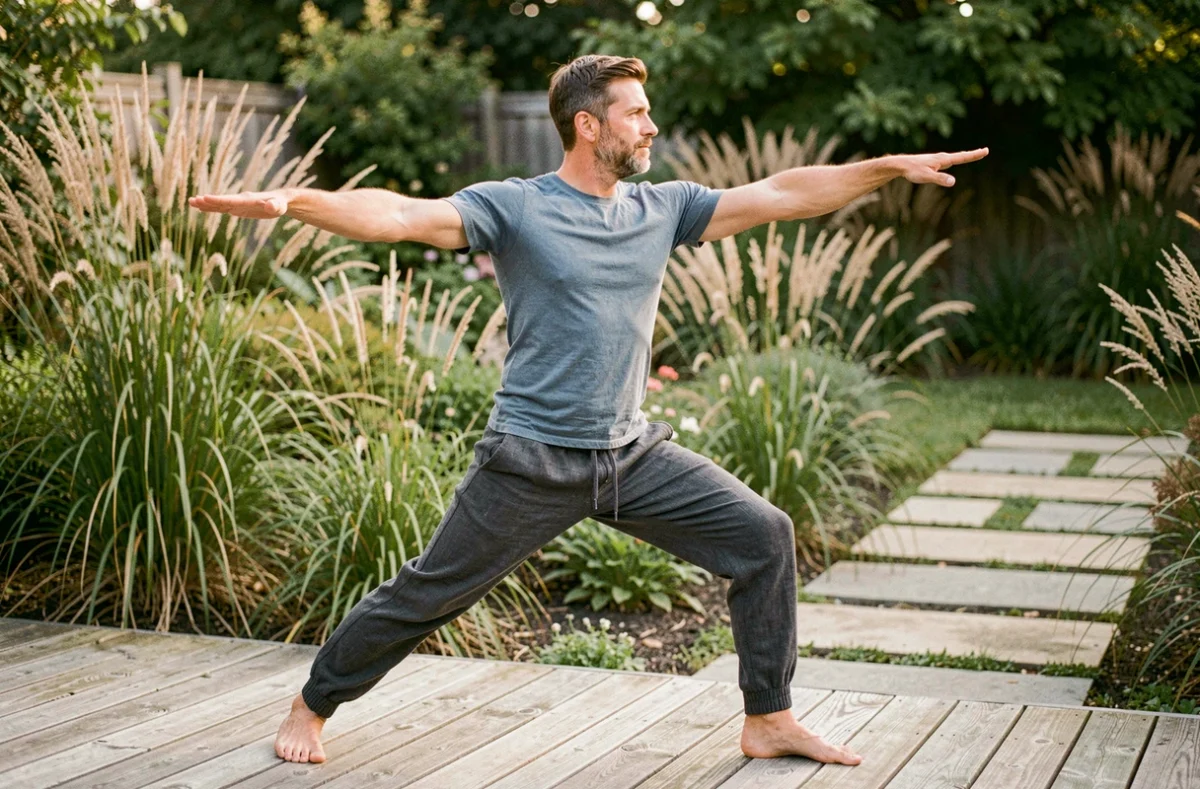
Regarding depression, the 2024 review found improvements, but the protocols varied so widely (session length, type of yoga, weekly frequency, post-intervention follow-up) that the results cannot be generalised to every style of practice. A one-hour hatha yoga class once a week does not have the same effects as an intensive eight-week therapeutic yoga programme.
This distinction is fundamental: a studio or teacher who promises to “cure” anxiety or depression crosses a line that scientific evidence does not support. Yoga can be a complement to medical or psychological care, not a substitute.
When to consult a health professional instead of changing your practice
Three situations call for medical advice before continuing or starting yoga:
- Joint or muscle pain that persists after sessions or occurs outside practice, especially in the neck, shoulders or lower back.
- Dizziness, blurred vision or headaches during inverted poses or intense breathing exercises (kapalabhati, prolonged breath retention).
- Emotional well-being that worsens rather than improves: increased anxiety, worsening sleep problems or more frequent rumination after sessions.
In these cases, the right response is not to “breathe better” or “let go”, but to ask a doctor or physiotherapist for an assessment.
Making yoga part of everyday life: one element of a routine, not a standalone solution
The WHO’s recommendations for adults, including people aged 65 and over, combine weekly physical activity, muscle strengthening and balance training. Yoga partly addresses balance and flexibility, but it cannot replace all the recommended activities on its own.
Someone who only practises gentle yoga (yin, restorative) does not reach the cardiovascular effort or muscle-loading threshold needed to maintain bone density. Combining yoga with brisk walking, swimming or resistance training provides complementary benefits that yoga alone does not.
Short sessions at work: a promising approach, not strong evidence
Some short workplace yoga sessions are emerging as a way to manage work-related stress. Early studies report improved self-reported well-being among participants. The limitations are clear: these studies rely mostly on subjective reports, with little long-term follow-up. Findings specific to certain sectors (technology jobs, open-plan offices) remain particularly limited.
These short sessions do, however, have a practical advantage: they lower the barrier to entry for people who might not feel comfortable walking into a studio.
Choosing the right yoga class: safety and progression criteria
Choosing a class depends less on the style (ashtanga, vinyasa, hatha, yin) than on the teacher’s ability to adapt the session. Here are some practical criteria to check:
- The teacher asks about health, previous injuries and any potential contraindications before the first class.
- Pose variations are offered as standard, not only on request. A class where everyone does the same pose at the same pace overlooks differences in body shape and ability.
- The studio’s communications make no explicit therapeutic promises (healing, detox, remission). Language focused on comfort, mobility and stress management stays within the scope of well-being.
- The teacher’s training can be verified: number of hours, certifying organisation and any specialisations (prenatal yoga, yoga adapted for people with disabilities).
A class that meets these criteria does not guarantee there will be no risk, but it considerably reduces the likelihood of injury or disappointment.
Yoga can genuinely help with stress management and joint mobility when practised regularly and guided by a teacher who is attentive to each student’s limits. Its effectiveness depends on what you expect from it: one tool among many in a health routine, not an answer to everything.